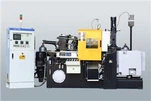
Driven by trends in the manufacturing industry, increasingly stringent demands are being placed on the precision, quality, and service life of die-cast parts. The die casting machine serves as the pivotal equipment in the production of these parts, while the die casting mold constitutes an indispensable component of the process. To produce high-quality, high-performance die-cast parts, what specific requirements must the die casting molds fulfill?
Without established standards and specifications, no task can be successfully accomplished. Therefore, prior to installing a die casting mold into a die casting machine, the mold must satisfy a specific set of criteria.
1. The die casting mold must meet the specific process requirements for the production of the die-cast part. In particular, during the design and manufacturing phases, precise calculations must be performed regarding the part's ejection structure and cooling system.
2. The structure of the die casting mold should be kept simple. This serves to streamline the operational workflow for personnel, ensure high precision in mechanical movements, provide excellent rigidity for the mold components, and guarantee sufficient overall strength, while simultaneously facilitating ease of installation, disassembly, and maintenance.
3. Every component of the die casting mold must meet high standards for mechanical machinability. Furthermore, the mold must satisfy ergonomic and operational requirements for manual handling. The materials selected for the mold must be appropriate for the application, and the dimensional tolerances and fits between mating parts must fall within a reasonable and acceptable range.
4. During the manufacturing process, the finished die casting mold must strictly adhere to the dimensions and various technical specifications stipulated in the engineering drawings for the die-cast part. This ensures that the subsequent machining allowance-the amount of material left for final mechanical finishing-is minimized.
5. The overall die casting production line must be capable of providing adequate pressure and cooling conditions. This ensures that every section of the die casting mold achieves effective thermal cycling in a timely manner, thereby significantly extending the mold's service life.
Based on the detailed introduction above, it is evident that the requirements for die casting molds used in conjunction with die casting machines are extensive. Consequently, when selecting a die casting mold, one must exercise great care and diligence. In cases where a custom mold is required, it is absolutely essential to clearly articulate all specific requirements to the mold manufacturer's design team.