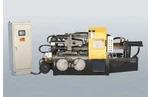
With the rapid development of industries such as automotive manufacturing and home appliances, aluminum die-casting technology has advanced significantly. Die-casting machines-the key equipment in this process-are categorized into cold-chamber and hot-chamber types.
How do their operating modes differ? Let's look at each:
Cold-Chamber Die-Casting Machine
The operating mode is as follows: First, the mold halves are closed, and molten metal is poured into the pressure chamber (shot sleeve). Initially, the injection plunger moves slowly until it makes contact with the surface of the molten metal.
Once contact is made, the injection speed increases, forcing the molten metal ahead of the plunger into the mold cavity; after the cavity is filled, the plunger applies holding pressure.
Hot-Chamber Die-Casting Machine
The operating mode is as follows: First, the machine's stationary platen, the mold sprue bushing, and the nozzle are aligned and pressed together, and the mold is closed. When the injection plunger is in the starting position, molten metal flows from the side inlet port into the injection chamber (gooseneck).
As the injection plunger moves downward, it seals off the side inlet port and forces the molten metal into the mold. When the plunger retracts, the molten metal remaining in the nozzle and gooseneck channel flows back into the injection chamber, at which point the stationary platen and mold sprue bushing separate from the nozzle.
As outlined above, die-casting machines are generally classified into two types: cold-chamber and hot-chamber. While hot-chamber machines often offer higher production efficiency, the two types operate differently and are suited for different applications. In actual production, the choice of machine depends on factors such as the material, type, and precision requirements of the product being manufactured.