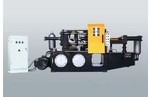
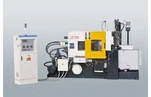
There are significant differences between die-casting machines and injection molding machines in terms of structure, production process, clamping strength, pump system, injection power, and applicability. These differences give them advantages in different production scenarios, and suitable equipment can be selected according to specific needs.
Structural differences
There are some key differences in the structure between die-casting machines and injection molding machines. Firstly, die-casting machines typically adopt a plunger type design, while injection molding machines have plunger, screw, and hybrid designs. This is because the melting process of the die-casting machine is carried out in the furnace, and then enters the injection cylinder in a nearly self flowing form, pushing the plunger to press the material into the mold cavity. In contrast, the melting process of injection molding machines is basically carried out inside the barrel, where the material enters the injection barrel through screws and plungers, and then the melted material is pressed into the mold cavity through piston motion.
Differences in production processes
The difference between die-casting machines and injection molding machines in the production process is mainly reflected in the injection process. The molten material of the die-casting machine is carried out in the furnace, and then enters the injection cylinder in a nearly self flowing form, pushing the plunger to press the material into the mold cavity. The injection molding machine basically melts the material inside the barrel, and the material enters the injection barrel through screws and plungers, and then presses the melted material into the mold cavity through piston motion.
Differences in clamping strength
Compared to injection molding machines, die-casting machines have higher clamping strength. This means that if the clamping part of 20 160T injection molding machines is used on the die-casting machine with force, it will cause serious damage. This is because the injection speed of the die-casting machine is faster and the impact force is greater, thereby generating greater kinetic energy.
The die-casting machine is a dual pump, while the injection molding machine is a single pump
Another important difference is that the die-casting machine uses a dual pump system, while the injection molding machine uses a single pump. This is because the injection molding machine's injection form is high-pressure and high-speed, so only a single pump large motor can be used. The injection of the die-casting machine is driven by an energy storage device, and the oil filling time of the energy storage device is extremely short, and the release time is also extremely fast, about two percent of a second.
The difference in output power
The injection power of the die-casting machine (called injection) is much greater than that of the injection molding machine (called injection). Assuming that the injection velocity is 30 times the injection velocity, i.e. the injection flow rate is 30 times the injection flow rate, if it is assumed that the injection pressure of both is the same, then the injection power must be 30 times the injection power. Therefore, to drive the injection, the motor needs to be increased by about 30 times at least.
Differences in scope of application
Die casting machines and injection molding machines also differ in their scope of application. Generally speaking, die-casting machines are suitable for producing large, thick walled plastic products, such as trash cans, water tanks, oil tanks, etc. This is because the press can provide higher pressure and temperature, so it can handle larger plastic particles and produce thicker plastic products. In contrast, injection molding machines are commonly used to produce small, thin-walled plastic products, such as plastic cups, plastic plates, plastic tableware, etc. Due to the precise control of plastic injection volume and pressure, injection molding machines can produce finer and more precise plastic products.