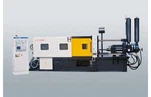
Among the various ownership enterprises, the large-scale annual output of die-casting parts is 10,000 tons, the maximum annual output is 60,000 tons, the medium-sized annual output of die-casting parts is about 5,000 tons, and the small-scale annual output of die-casting parts is also several hundred tons. . The proportion of various die-casting parts in the total amount of die-casting parts, aluminum alloy accounts for about 83%, zinc alloy accounts for 15%, and left gold accounts for 2%, of which about 5.6 million tons of aluminum alloy die-casting parts were produced in 2014.
The main output of die-casting products is mainly automobile and motorcycle parts. The die-casting parts used in each automobile are gearbox housing, cylinder block and crankcase quasi-die casting. The average die-casting part of each car is 75 kg, total weight. It accounts for more than 50% of the total production of die-casting parts in China.
The manufacturing precision of die castings is very high, mainly including grinding, cutting, welding and other processes.
In the CNC center, five-axis and three-axis CNC machine tools are used for machining. The design of such high-precision machine tools uses a series of high-precision pneumatic actuators such as cylinders. Affected by traditional processes, most of the finished products produced by casting manufacturers often have high defect rate, and the processing accuracy is difficult to meet the requirements, and such problems have not been effectively solved. Many companies are confused: Why is the processing precision of the same imported machine tools in domestic production far from the foreign ones?
Through the search for various reasons, it was finally found that the timeliness and accuracy of the operation of a series of pneumatic components such as cylinders in the original CNC machine tools are crucial to the accuracy of the machining, and the motion of the pneumatic components is closely related to the quality of the air source. However, in most of the existing die-casting plants in the configuration of the air compressor system, the most traditional drying method, that is, the post-cooling dryer is used for cooling and drying. The compressed air pressure dew point after cooling and drying is generally between +10 ° C and +15 ° C. (higher than the mechanical industry standard JB/T5967-2007 sixth grade requirements);
The pneumatic components used on high-precision CNC machine tools clearly require the pressure dew point to be below +3 °C (according to the mechanical industry standard JB/T5967-2007 four grade requirements), the moisture content in the compressed air seriously exceeds the equipment requirements.
After finding out the cause, the post-processing equipment was immediately rectified, and the original cold-drying machine was replaced by a core-adsorption dryer. The pressure dew point after replacement could reach -20 °C, which fully met the production requirements. After one month, statistics and analysis were carried out on the precision of the production defective products and finished products. It was found that the defective products were reduced by 5% and the precision was greatly improved.