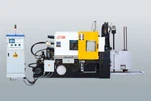
1. Die Casting Machine Injection Force
This refers to the injection force before pressurization. The performance parameters provided by manufacturers are generally the injection force after pressurization. As we all know, insufficient injection force before pressurization cannot completely overcome the frictional resistance of the molten metal as it passes through the ingate (inner gate), severely affecting the molding of the casting and failing to ensure the internal quality of the casting. Therefore, before purchasing a die casting machine, you should inquire about the injection force before pressurization or clarify the diameter of the injection cylinder so that you can calculate whether the injection force is sufficient.
2. Die Casting Machine Pressurization Start and End Time
This refers to the time from issuing the pressurization command to the start of pressurization, that is, the interval from the termination of the injection needle's movement (dry injection) to the start of pressurization. This time interval should be less than 0.02 seconds, the less the better. If the time is too long, the molten metal in the ingate (inner gate) will have already solidified, and the pressurization will fail.
3. Die Casting Machine Pressure Build-up Time
This refers to the time required from the start of pressure build-up to reaching the required pressure value (the pressure at which pressure fluctuations are eliminated and the required constant pressure is reached is the build-up pressure). This time should be less than 0.02 seconds. Otherwise, the casting will not experience sufficient pressure during the secondary filling process (the injection of molten metal into the die at high pressure and low speed, also known as pressurization). The pressure will only reach 90% after solidification, inevitably reducing the effectiveness of the pressure build-up, or even eliminating it altogether. Generally, the sum of the pressure start and end time and the pressure build-up time is the pressure build-up time, which should be less than 0.04 seconds. This parameter is particularly crucial for castings with thin inlet gates (internal sprues) and those requiring high strength and load-bearing capacity.
4. Shock Wave Value (AP) During Pressurization in Die Casting Machines
When the injection needle stops abruptly after pressurization, the high-speed moving injection piston, pressurizing piston, and gear oil create alternating shock wave peaks and troughs on the molten metal. This causes the bubbles entrained in the molten metal to expand and contract. Experiments and analysis by the former Ministry of Aeronautics and Astronautics' experimental group revealed that these alternating shock wave peaks and troughs cause micro-cracks near the vents inside the casting after cooling. These cracks easily become sources of fatigue in load-bearing products. The larger the shock wave, the more numerous and longer these micro-cracks, and the more severe the impact on the physical properties of the casting. Therefore, ΔP should generally be below 5%.
5. Sensitivity to Changes in Injection Rate and Pressure in Die Casting Machines
The injection rate consists of two parts: a slow injection rate followed by a fast injection rate. To ensure sufficient mechanical energy during the filling of the molten metal, enabling it to reach and fill the deep, far, and thick-walled areas of the die cavity, the molten metal needs to fill rapidly once it reaches the ingate (inner gate). In other words, the die casting machine must immediately produce a fast injection rate.