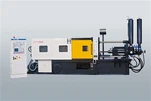
With the development of the manufacturing industry, there are higher demands on the precision, quality, and service life of die-cast parts. Die-casting machines are key equipment in the production of die-cast parts, and die-casting molds are an indispensable part of them. What are the requirements for die-casting molds to produce high-quality, high-performance die-cast parts? Therefore, before installing a die-casting mold on a die-casting machine, the mold should meet certain standards.
1. The die-casting mold must meet the process requirements for the production of die-cast parts, especially in its design and manufacturing, with careful consideration given to the mold release structure and cooling of the die-cast parts.
2. The structure of the die-casting mold should be simple, thereby reducing the number of steps for the operator, ensuring high accuracy of movements, good rigidity of components, sufficient strength, and ease of installation, disassembly, and maintenance.
3. Each part of the die-casting mold should have good machining process conditions, and it should also meet the process requirements and standards for manual handling. The materials used should be suitable, and the tolerances should be within a reasonable range.
4. During production, the die-casting mold should conform to the dimensions and various technical requirements specified in the die-cast part drawings, thereby reducing the amount of machining and processing required.
5. The overall die-casting production line should be able to meet sufficient pressure and cooling conditions to ensure that each part of the die-casting mold can achieve effective thermal cycling, thereby extending the service life of the mold.
As seen from the above description, the requirements for die-casting molds used with die-casting machines are quite numerous. Therefore, careful selection is necessary when choosing die-casting molds.