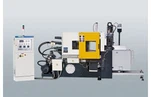
There are many types of die-casting machines, divided into hot-chamber and cold-chamber types based on their die-casting processes. Cold-chamber die-casting machines are popular among customers due to their wide range of applications and stable performance. Many customers find silver streaks appearing in parts cast during die-casting, which puzzles them. The following explains the reasons.
Cold-chamber die-casting machines have a large number of parts, made of a variety of materials. During installation, manufacturers must consider the overall characteristics of the equipment. Parts with poor heat resistance are more susceptible to quality issues during die-casting, so these substandard parts must be replaced, especially in terms of material, as plastics are more heat-resistant.
Silver streaks can also occur if the plastic inlet of the component is too large or too small. These issues require improvement during assembly, and the best approach is to adjust the orientation of the plastic inlet. If there's water in the material, all parts of the cold chamber die-casting machine must be dried out.
If the machine is running too fast, it must be slowed down. If there's gas in the barrel, the colloidal solution flow rate must be slowly reduced.
If the cold chamber die-casting machine's mold venting is poor, it should be scientifically improved. If a large number of finished products are observed during production, they should be reduced. If the temperature at the opening is too high, refrigeration equipment should be used to reduce the temperature.
There are many reasons for silver streaks in parts cast by cold chamber die-casting machines. In actual production, when these problems are encountered, they must be scientifically addressed to improve the quality of the die-cast parts.